
Greeneville Police Release and Intake Paths
Within the Greene County release workflow, Greeneville Police is chiefly the arresting and short-term intake agency. Local reports repeatedly describe city arrestees being taken to the Greene County Detention Center. Once the Sheriff accepts the person, the county jail record becomes the main source for booking, custody, release, or transfer. Do not expect the city agency to maintain a public former-detainee list that duplicates the Sheriff’s system.
A person may be cited or released under lawful authority, taken to the county jail, brought before the court, or handed to another custodian. An arrest report can document the police encounter but does not prove a later jail release. Likewise, a court order explains legal authority but may not show the exact time the Sheriff completed processing.
Greeneville Police Release Without Booking
Some police encounters may end with a citation or another authorized release without a Greene County jail booking. In that situation, the Sheriff’s portal may have no record because the person never entered the Detention Center. Request the city arrest, custody, incident, or citation record that already exists, and pair it with the corresponding court case. Do not treat the lack of a county booking as proof that no police custody occurred.
The city record can identify the police event and recorded disposition, subject to lawful limits. The court file then shows whether a bond issue, dismissal, plea, judgment, or later order followed. If the police record instead says the person was delivered to the Sheriff, switch to the county custody trail and obtain the booking and release transaction there.
This distinction prevents a circular search. The city should not be asked for a Sheriff release sheet, and the Sheriff should not be asked to invent a booking that never occurred. Request each existing record from its custodian and retain the agency name beside every timestamp.
Greeneville Police Release Identity Checks
Identity matching is especially important when the police incident, county booking, and court file use different numbers. Carry the full legal name, date of birth, incident number, booking number, and court case number where lawfully available. Note aliases and middle names. Age, race, or sex can support a match, but none should be the only link between records.
Build the event chain in order: police contact, citation or transport, county acceptance if any, release or transfer, court authority, and later custody or supervision. Dates can differ because an order may precede physical processing and an online system may refresh later. Greene County is in Eastern Time, so retain the source’s level of precision and never turn a date-only result into an exact hour.
If one source identifies a transfer and another says release, preserve both terms and ask the office that created the disputed entry. Official custody wording controls over a local headline or social post.
Confirm a Greeneville Police Release
No separate municipal inmate search was identified. Start with the Greene County Sheriff-linked portal when the person may have been booked at the Detention Center. The portal is a current inmate search, not a documented release archive. A blank result can mean release, transfer, spelling variation, processing lag, or another issue. It does not prove community release.
- Confirm that Greeneville Police was the arresting agency and collect the correct name, date of birth, and incident or case number.
- Search the county portal with the full name and aliases, then record the check time.
- Call the Detention Center to ask whether the person entered county custody and whether the departure was release or transfer.
- Request the police incident or arrest record from its custodian and the jail custody history from the Sheriff when both are needed.
- Ask the Greene County clerk for the bond, dismissal, judgment, probation, revocation, or other order tied to the case.
The county-wide search routes and records-request steps are detailed on the Greene County released inmates page.
Greeneville Police and County Jail Records
Keep each request tied to the office that created the record. A city incident report, arrest narrative, citation, or property record belongs with the police custodian. A booking sheet, custody history, release timestamp, release category, and receiving-agency entry belong with the Sheriff if the person entered the county jail. The legal disposition belongs in the court file.
The county jail dates to about 1997 and has a stated capacity of 167; the Sheriff-managed Workhouse dates to about 2002 and has a stated capacity of 273. These are design capacities, not current population or release totals. Movement between the buildings is continued county custody, so a person delivered by Greeneville Police may change locations without being released to the community.
| Needed fact | Likely source |
|---|---|
| Who made the arrest | Greeneville Police incident or arrest record |
| County booking and custody | Greene County Sheriff jail record |
| Physical departure time | Sheriff release or transfer transaction |
| Bond or case disposition | General Sessions or Criminal Court file |
| State transfer or supervision | TDOC FOIL and TDOC records |
Do not ask one agency to create an explanation from records held by another. Narrow requests are easier to route and less likely to mix different events or people.
Greeneville Release Court Records
The Greene County Circuit Court Clerk serves General Sessions, Criminal, Circuit, and Juvenile divisions. General Sessions is commonly the starting point for misdemeanors, preliminary felony events, and bond activity. Criminal Court carries indicted-felony pleas, judgments, sentences, and amended orders. Ask for the docket sheet, charging instrument, bond order, judgment or disposition, sentencing order, and any public probation or revocation entry relevant to the event.
101 S. Main Street, Suite 302
Greeneville, TN 37743
423-798-1760, 423-798-1762, or 423-798-1765
Monday through Friday, 8:00 a.m. to 4:30 p.m.
The courthouse prohibits phones, smartwatches, cameras, backpacks, and large handbags. Bring case details on paper and prepare electronic files on an allowed external drive. Tennessee Public Case History covers appeals, not routine trial-level name searches, so contact the clerk for the local case.
Greeneville Police Intake Transfers
When the Sheriff says a city arrestee left the Detention Center, ask for the destination. A move to the Workhouse is continued county custody. A TDOC handoff is state incarceration. A release to ICE or a federal detainer transfers the person into another sovereign’s control. Each event can clear the local portal without returning the person to the community.
For a possible state transfer, search TDOC’s Felony Offender Information Lookup after processing time. An incarcerated status and prison location support continued state custody. Parole or probation generally signals community supervision. Inactive requires record detail before it is translated into a release reason. For a federal prison matter use BOP; for federal pretrial custody use the federal docket or U.S. Marshals FOIA because no public Marshals locator exists.
Records Access After Greeneville Intake
Greene County publishes inspection and duplication instructions and a public-record request form for county-held material. A request for the jail record should name the person, approximate confinement dates, and booking number if known, then list the desired booking date and time, release date and time, category, destination, and custody history. Request the booking photograph separately and recognize that exceptions can apply.
Tennessee law generally protects inspection of sufficiently described public records for eligible requesters, subject to exceptions. Inspection ordinarily cannot be conditioned on a written request or inspection fee. Copies can require writing and lawful page, labor, or media charges. The response framework requires prompt action or, within seven business days, production, a written denial with legal grounds, or a written estimate of the time needed.
Expungement can change later availability. An eligible order is sent to the relevant agencies, and TBI describes eligible records as deleted rather than merely hidden. Do not rebuild a lawfully removed record from an old news report or private repost.
Local Sources Are Leads, Not Proof
Radio Greeneville and other local outlets often report arrests, warrants, court events, and detention proposals. The Sheriff’s Facebook page carries selected alerts. These channels may help identify an agency, spelling, or case date, but neither is a systematic release archive. A story timestamp cannot replace the Sheriff’s custody record or the clerk’s judgment.
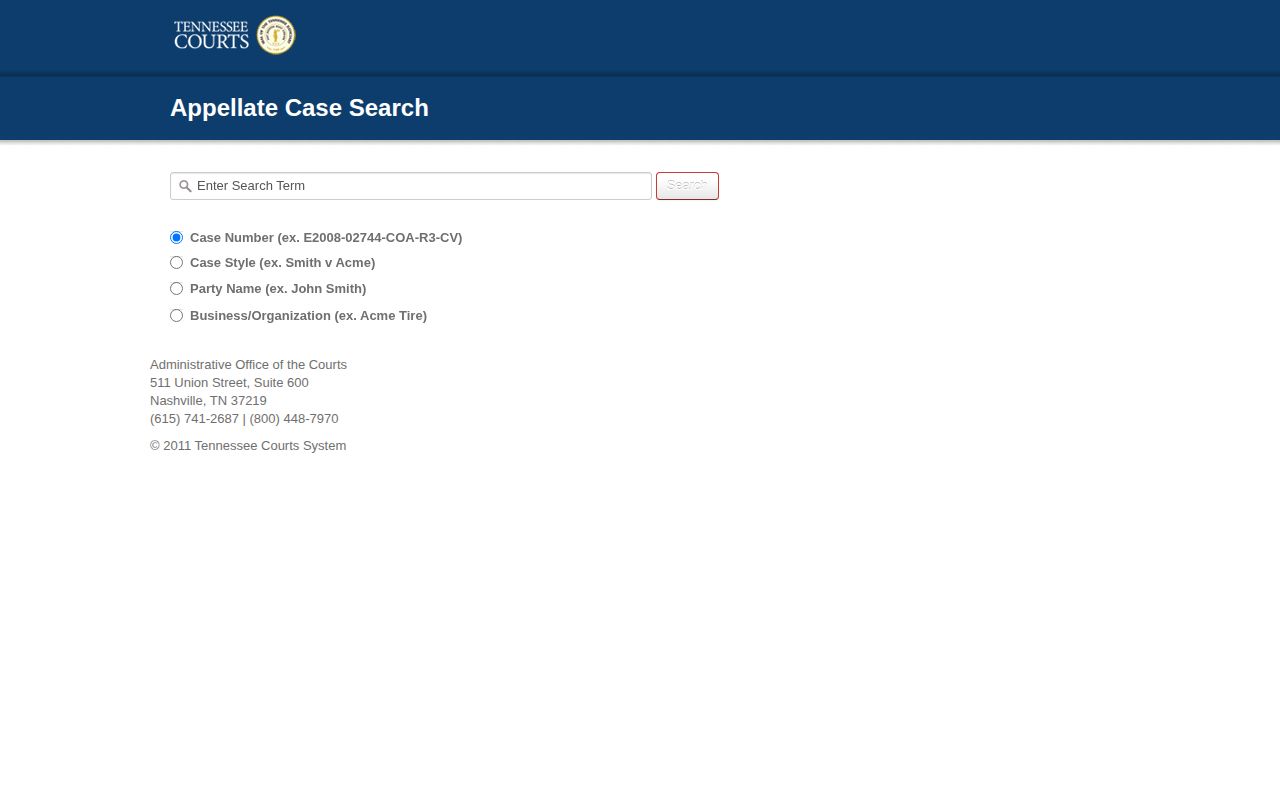
The Tennessee Public Case History portal can be useful when a Greene County matter reaches an appellate court. The captured official page below should be read within that narrow scope.
Resolve Greeneville Release Conflicts
Construct a timeline: last known police contact, delivery to the county jail if any, the Sheriff’s release or transfer transaction, the court authority, and the next custodian or supervision record. If the court shows bond but the jail still shows custody, another case or hold may control. If the county portal clears while FOIL shows incarceration, treat the event as a likely TDOC transfer until verified.
Greene County is in Eastern Time, and some databases show only a date. Do not invent an hour from a date-only field. Match identities with date of birth, case number, booking number, TDOC or State ID, or federal register number. When systems disagree, preserve both records and contact the office that supplied the disputed data.