
ICE Detention Release Paths
The ICE detention system is a federal civil immigration network, not a Greene County jail. A person may enter it after the Greene County Detention Center, TDOC, another jail, or a federal criminal custodian honors an immigration detainer or arranges a handoff. The sending record may use words such as "released to ICE." In that setting, Greene County or TDOC custody ended, but custody itself continued under ICE. Describe the event as a transfer unless an ICE source later confirms release from immigration detention.
After ICE custody, several outcomes are possible. The person may be released under immigration conditions, transferred to another ICE location, moved to another authority, or remain detained while the immigration matter continues. The Online Detainee Locator System, or ODLS, shows current detention and a limited set of recent releases. It does not decide the immigration case. An immigration-court order and the physical custody event answer different questions, just as a Greene County court order and a jail transaction can occur at different times.
Search ICE Detainee Release Records
Use the ICE Online Detainee Locator System for a current detainee or someone released from ICE within its recent window. ODLS offers two identity routes. The number route requires an exact nine-digit A-number and country of birth. If the A-number has fewer than nine digits, add leading zeroes. The biographical route requires exact first and last name plus country of birth, with date of birth available as an optional narrowing field.
Spelling matters. Names can contain more than one part, and a transposed or missing name can produce no result. Match the result with all reliable identifiers instead of relying only on age, race, or sex. ICE excludes people under age 18 from ODLS, so a missing minor is a scope issue, not proof that ICE never held the person. The Greene County release search and records path can establish the local event before the federal search begins.
- Confirm whether the Greene County or TDOC record names ICE as the receiving custodian.
- Choose the A-number route or the exact-name route in ODLS.
- Enter country of birth and the other required identity fields exactly.
- Read the result as an ICE custody status, not as a ruling in the immigration case.
- Save the search date and contact ICE when the event falls outside the locator's scope.
ICE Release Record Scope
ICE states that ODLS includes current detainees and people released within the last 60 days. The window is short. Once a released record ages out, a blank result does not mean the person was never detained or released. It means the public locator no longer covers that event. Preserve any prior result, sending-agency record, A-number, and event date so the later inquiry can be specific.
| Search fact | ICE scope and meaning |
|---|---|
| Exact A-number | Nine digits are required, with leading zeroes added when needed, plus country of birth. |
| Exact name | First and last name plus country of birth are required; date of birth can narrow the match. |
| Current result | Shows an ICE detention status or location within the locator's public scope. |
| Recent release result | May remain available only during the 60-day released-person window. |
| Person under 18 | Excluded from ODLS, so another authorized channel is required. |
| No result after 60 days | Shows a locator limitation, not proof against prior custody or release. |
ODLS status is not an immigration-court disposition. A release can still involve conditions or another custodian. Likewise, a court ruling may precede the operational release. When proof matters, pair the locator result with the agency record and the applicable case document.
Note: Record the exact ODLS search date because the released-person window is measured from the ICE event.
ICE Release Records and Contact
When ODLS does not return an older released record, use the ICE Detention Reporting and Information Line, known as DRIL. The research identifies 1-888-351-4024 and published hours of Monday through Friday, 8:00 a.m. to 8:00 p.m. Eastern. Provide the A-number if known, exact name, country of birth, date of birth where appropriate, the sending agency, and the approximate event date. Privacy and identity rules may limit what can be disclosed about another person.
ICE Detention System InformationOnline: Online Detainee Locator System
DRIL: 1-888-351-4024
Hours: Monday-Friday, 8:00 a.m.-8:00 p.m. Eastern
Local facility: No verified ICE detention center or current ICE agreement in Greene County
Use an ICE records process for a documentary federal custody record, subject to federal privacy and disclosure limits. Ask for an existing record tied to the person and date range. Do not ask the agency to create a new legal analysis. If the key question is the immigration case outcome, use the proper immigration-court or case channel rather than treating a custody hotline as the court.
ICE Recent Release Locator Limits
The official ICE attorney information and resources page documents the locator's role and the limited recent-release coverage.
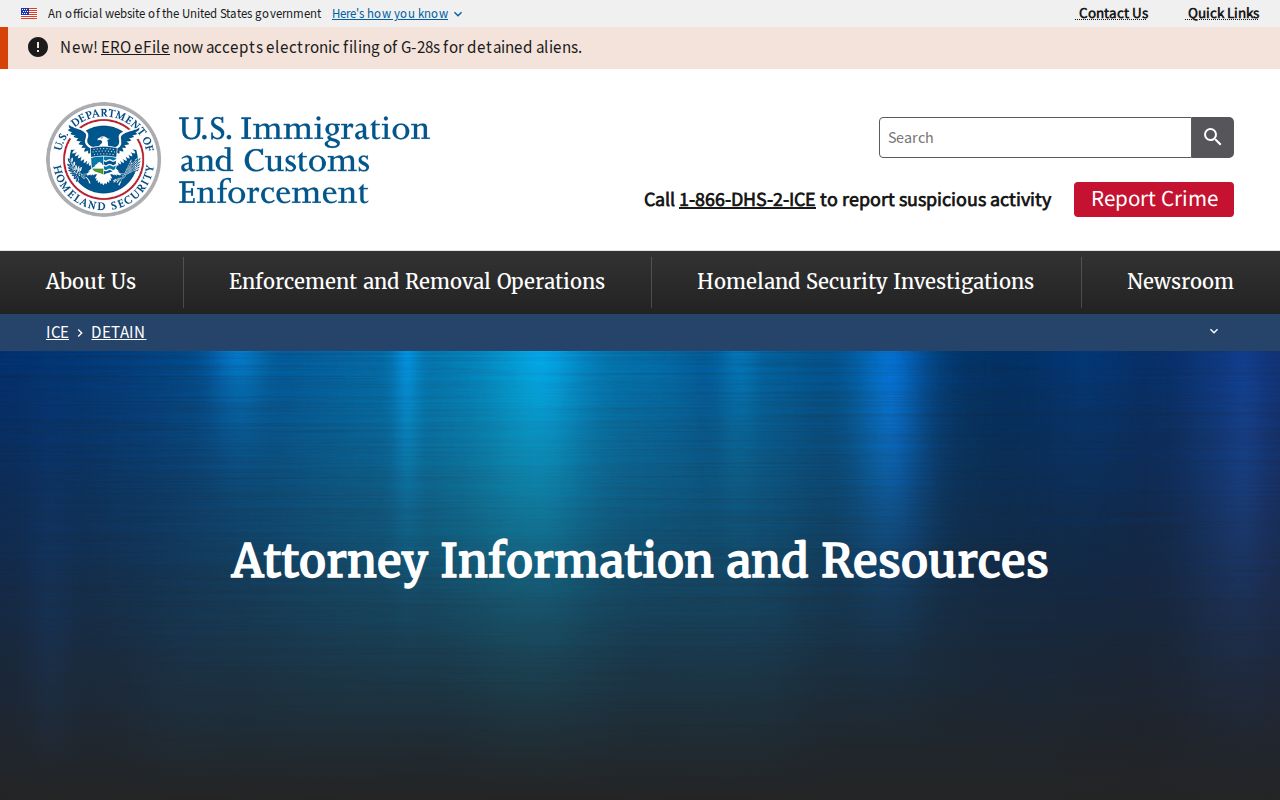
The captured source supports using ODLS for current and recent ICE events while directing older requests to DRIL and agency records. It does not establish a Greene County ICE facility.
Greene County ICE Transfer Records
A Greene County jail record should state the destination or receiving agency when that field is public. If it says ICE, retain the county release date and time, category, booking number, and destination. The Sheriff's transaction proves when local custody ended. ODLS or an ICE record then addresses federal immigration custody. A court bond or sentence record may explain the local authority, but it cannot prove that ICE later released the person.
The same rule applies to TDOC. A state sentence may end while an immigration detainer produces a direct handoff. TDOC custody ended, but the person did not necessarily enter the community. Tennessee VINE may report a custody change from the sending agency, yet VINE is not a certified ICE record or immigration decision. Follow the event into ODLS and preserve each agency's terminology.
| Source | Question it answers |
|---|---|
| Greene County custody history | When county custody ended and whether ICE was named as the destination. |
| TDOC release documentation | When state custody ended and whether a detainer handoff followed. |
| ODLS result | Whether ICE reports current detention or a release still within the public window. |
| ICE agency record | Documentary custody or disposition data that may be disclosed under federal rules. |
| Immigration case record | The legal proceedings and orders, which are separate from physical custody status. |
No Greene County ICE Facility
No authoritative source established an operating ICE detention center or current ICE contract in Greene County. Do not infer one from a person transferred out of the county, a similarly named county in another state, or a federal proposal. The Facility Map treats ICE as a national system serving a possible custody transition, not as a local jail with an address, lobby, release desk, or public schedule.
A reported 2024 proposal for a federal residential reentry center in Greeneville encountered a site and zoning problem, and the proposed industrial-park location did not proceed in the sourced report. A residential reentry proposal is also not the same thing as an ICE detention center. It must not be listed as an operating facility or used as a contact point.
The absence of a verified local site makes the destination field more important. Ask the sending custodian where the person was transferred, then use ICE's national channels. If facts instead point to the U.S. Marshals Service, the U.S. Marshals prisoner records route explains the federal court and FOIA path.
Greene County Facilities Before an ICE Transfer
Greene County identifies two Sheriff-managed custody buildings: a Detention Center dating to about 1997 with a stated capacity of 167, and a Workhouse dating to about 2002 with a stated capacity of 273. Those figures describe facility capacity, not current population or annual releases. A move from the Detention Center to the Workhouse remains county custody and must not be labeled either community release or an ICE handoff.
Only the sending record can establish the next custodian. When that record names ICE, follow the event into the federal immigration system. When it names the other county building, continue with the Sheriff. This local facility history matters because a person can disappear from one operational view while remaining confined under the same county authority.
Confirm ICE Detainee Release
A sound release finding keeps custody levels separate. "Greene County custody ended" describes the Sheriff's event. "TDOC custody ended" describes the state event. "ICE released the person" requires an ICE source within the locator window or a later agency record. Those statements can describe different dates. Report each date with its source and precision instead of compressing the chain into one generic release claim.
Conflicts need follow-up. If the county says transfer to ICE but ODLS is blank, recheck the exact A-number, country of birth, spelling, age, and timing. Call DRIL when the person is excluded, the event is older, or the result remains unclear. If ODLS reports release but another agency shows custody, compare dates and ask which custodian received the person. A federal release can still be followed by state, county, or another form of custody.
Greene County uses Eastern Time, while a federal display may provide only a date. Keep the time zone and the source's level of precision with each note. Never infer midnight from a date-only result. When two people share a name, use the A-number and country of birth as the primary ICE match rather than choosing a record from a loose name similarity.
Protect identity during the search. Keep only the identifiers needed to distinguish the correct person, and do not publish home or intended-residence details simply because a record contains them. The goal is to verify the custody transition and its source.
Note: A blank ODLS result can reflect spelling, age, timing, or scope and should not be treated as proof.